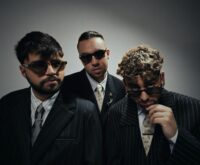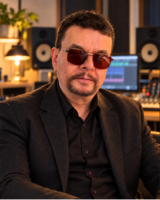
Welcome to an exclusive spotlight feature on the enigmatic and formidable musical force, The Real Mack The Knife! Known for pushing boundaries and defying traditional genre limitations, this remarkable artist has returned with a thrilling, high-stakes single titled “Roulette At Rascasse.”

Drawing inspiration from cinematic drama, luxury, and high-octane suspense, the track transports listeners directly into the glamorous yet treacherous world of elite casinos, dark alleyways, and fast-paced intrigue. “Roulette At Rascasse” combines sharp lyrical storytelling with a dark, pulsating sonic layout that keeps audience members on the absolute edge of their seats from start to finish. In this candid, wide-ranging interview, we sit down with The Real Mack The Knife to peel back the curtain on the creative vision, studio secrets, and real-life inspirations behind this standout release. We explore the intricate narrative structure of the track, the precise production choices that created its dangerous atmosphere, and what it takes to stay fiercely authentic in an ever-shifting music industry.
Furthermore, we get personal, uncovering the artistic philosophy, daily rituals, and unexpected musical influences that drive this visionary talent. Whether you are a long-time follower of their groundbreaking discography or discovering their unmistakable sound for the very first time, this conversation offers a captivating look into the mind of a true original. Get ready to roll the dice, dive into the story behind “Roulette At Rascasse,” and discover what makes The Real Mack The Knife one of the most exciting names in music today!
Press Q&A with The Real Mack The Knife
Q: “Roulette At Rascasse” has an incredibly cinematic, high-stakes atmosphere. What was the creative concept or story that inspired this specific theme?
The Real Mack The Knife: Real casinos, a real woman, and a run of cities: Monaco among them that felt less like places I was visiting and more like a plot I’d wandered into without reading the script first.
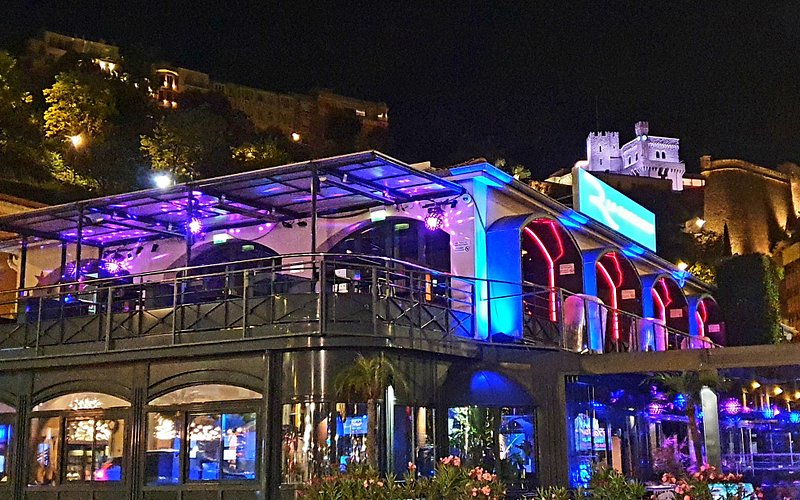
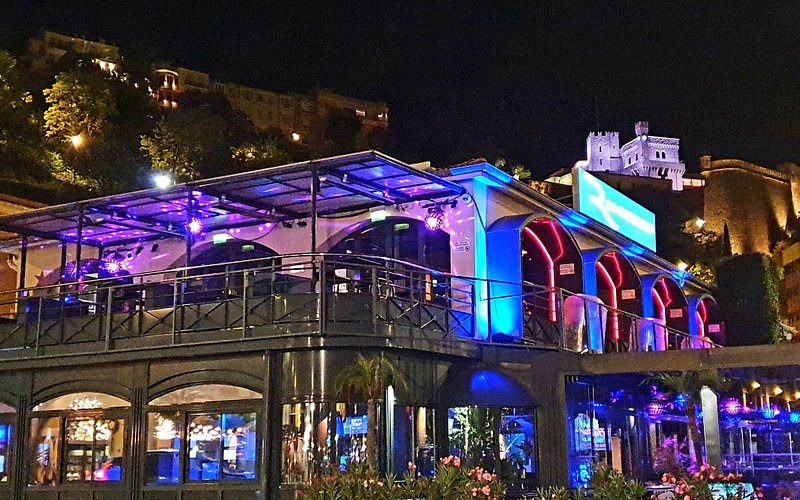
I sat down at a table in Monte Carlo and lost considerably more than the chips would suggest. I’d tell you I don’t regret it, but that would ruin the ending.
I wasn’t interested in writing the wise version of that night, the one where the danger is safely in the past tense and everyone nods along about lessons learned. That version is very responsible and very dull. I wanted the version where the wheel is still spinning and you haven’t yet decided whether you are the exception to every rule you know by heart. Most people don’t fail to see the warning sign. They just find it devastatingly well-dressed.
“Midnight In Marrakesh” is probably the closest cousin in the catalog: different city, different temperature, same weakness for wanting something you’re fairly sure you shouldn’t. That one whispers. This one drives with the top down.
Q:The track has such a bold, raw grit to it. How did you approach the production and instrumentation to capture that intense, live energy?
The Real Mack The Knife: The roulette wheel at the beginning isn’t decoration. It is the whole argument of the song in ten seconds. It spins, promises an answer, and takes its time giving you one, which is either very seductive or very rude depending on your mood that evening.
The guitars do the heavy lifting. I wanted friction in them, a little danger and imperfection. A room full of people making terrible decisions has no business sounding tidy about it. There is a little Link Wray menace in the guitar work the sense that something civilized may be about to misbehave.
The electronic side is colder on purpose. That is Monaco after midnight: chrome, glass and very good tailoring concealing motives that are not, strictly speaking, good at all.
Getting that balance right took longer than writing the track. Too polished and it sounds like a nice restaurant. Too rough and you lose the part where it is supposed to charm you against your better judgment.
There is a version of this track that behaves itself completely. I fired that version.
Q: If “Roulette At Rascasse” was the theme song to a character in a film, who would they be and what kind of trouble would they be getting into?
The Real Mack The Knife: A man who has been burned enough times to spot a setup from across a crowded room and strolls toward it regardless, because recognizing trouble and having any interest in avoiding it turn out to be two completely unrelated skills.
He arrives with money, good posture and a woman who makes the entire principality feel as though it was rearranged specifically for their arrival. By sunrise, he genuinely cannot say whether he was chasing her, being chased, or simply cast in a story that started running before he showed up for rehearsal.
She never actually lies to him. She just hands him whichever version of the truth he was already hoping to hear, gift-wrapped.
He is not innocent and he is not a fool. That would make the whole thing far too easy, and nobody wants to watch a film that easy.
He thinks he is playing the table. Somewhere around dawn, he realizes he was one of the chips.
Q: For fans who are discovering your music through this track, how does “Roulette At Rascasse” represent the core identity of The Real Mack The Knife?
The Real Mack The Knife: The whole project runs on the conviction that a city can hold a feeling just as well as a person can—and often holds onto it longer.
Change the skyline: Seville, Marrakesh, Havana, Mumbai, Monaco, and what is under the microscope barely moves. It is usually the same handful of things people want, fear and risk, along with the excellent excuses they invent to make those risks feel reasonable at the time.
“Club Sevilla” is probably the easiest front door: dark, catchy, flamenco passion under strobe lights and built to move. “Mumbai Lights” goes somewhere else entirely, with four languages sharing the work one language usually tries to do alone, full of color, ambition and big-city velocity. Set those beside “Roulette At Rascasse” and the pattern becomes clear. It was never meant to be a travelogue. It is the same human argument delivered in different accents, cultures and emotional temperatures.
I’m not in the postcard business. A postcard tells you where somebody went on holiday. I would rather you finish the song feeling as though you have been there yourself, noticed something about the place and the people, and brought part of it home with you.
Every location in the catalog has some personal significance to me. The music is primarily something I make because I need to make it, but if someone hears “Roulette At Rascasse” while driving to the laundromat and, for four minutes, feels dropped into a Monaco noir film full of fast cars, opulence and danger, whether as the femme fatale, the gambler or the mark that is the payoff.
Q:What is something about your creative process or your daily life as an artist that would genuinely surprise your listeners?
The Real Mack The Knife: Probably how much of it starts nowhere near a studio.
I collect the raw material the ordinary way: a sentence someone said that I never quite got over, the particular silence of a hotel room at four in the morning, the look on someone’s face just before they decide to do something they will enjoy and regret in roughly equal measure.
Some of that sits untouched for years before it earns its way into a song. I am not in a hurry about it. Good trouble is worth waiting for.
“El Amor Es Un Pájaro Rebelde” is the track I mention when people assume everything begins from nothing. The melody comes from Bizet’s “Habanera” in Carmen, translated into Spanish and placed inside a modern arrangement. I do not think of that as borrowing so much as joining a conversation that has been going on for a century and a half. Carmen had this entire business figured out long before I arrived: desire has never asked permission, and it is not about to start now.
I also once imagined I might become a baritone, although naturally I wanted the heroic tenor parts. I studied instruments and performance, but eventually realized that songwriting and production were where my instincts were strongest.
The tools change. Human emotion does not. I try to notice which old feeling still has a pulse and have the good manners to leave some of it unexplained.
Q: With this incredible single out in the world, what is the next big move? Are there more tracks or live shows on the horizon that we should keep an eye on?
The Real Mack The Knife: More is coming, and the shape of the larger project is beginning to emerge through the fog, if you squint.
As for where it goes next, a place or experience has to earn its track. It has to stay with me, change temperature in my memory and refuse to leave quietly.
I am also looking beyond the recordings toward visual work, the right collaborators and eventually the very enjoyable tension between what one person can build alone at three in the morning and what a room full of musicians can do live, in front of people, with no undo button.
I do not see those things as rivals. One widens the frame. The other has to be worth standing inside it. I’ve been fortunate thus far with collaborators.
“Roulette At Rascasse” is not a new direction. It is simply one of the better-lit rooms in a house that was already fully furnished.
Written by Shertara Brazil
CLICK HERE TO LEARN MORE ABOUT THE REAL MACK THE KNIFE
STREAM THE REAL MACK THE KNIFE
FOLLOW THE THE REAL MACK THE KNIFE