
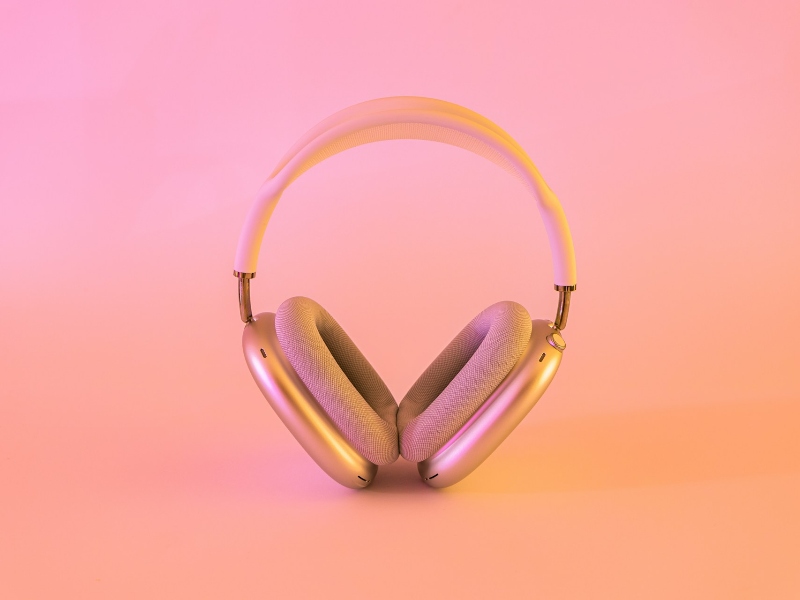
Portable music has undergone significant progress, transitioning from large radios to compact, pocket-friendly devices. Today, your smartphone can hold thousands of songs, stream live concerts and even deliver spatial audio mixes designed to feel three-dimensional through headphones.
As music continues to evolve, it is moving beyond passive listening toward experiences that are increasingly immersive, interactive and personalized.
The Evolution of Music Portability
In 1989, the film Do the Right Thing illustrated how portable music could transform public spaces into a powerful statement. Radio Raheem’s boombox resonated through the streets with hip-hop. This moment foreshadowed a future where portable devices would influence both personal and political soundscapes while on the go.
That idea began much earlier. In 1923, Edwin Howard Armstrong’s portable superheterodyne radio proved that music could travel with the listener, even if the device was still bulky. After World War II, lighter radios and the transistor revolution of the 1950s made private, mobile listening practical, turning music into a constant companion. The Walkman of the 1980s cemented this shift, followed by digital players like the iPod and, later, smartphones that combined music, communication and entertainment in a single device.
Today, the evolution continues through listening hardware. In-ear monitors are gaining popularity due to their exceptional clarity, effective noise isolation and professional-grade sound quality. This shift reflects growing demand for portable music, accuracy, immersion and individual control — themes that define where portable music is headed next.
The Dawn of Immersive Audio
Spatial audio is taking center stage in the music production industry. Positioning sounds around, above and below the listener adds depth and realism, fully engaging the audience. It can create a strong sense of presence by placing sound in three-dimensional space and responding naturally to a listener’s movements.
This realism makes it a key enabler for virtual music spaces. Without spatial audio, virtual concerts and shared music experiences can feel less convincing, reducing the sense of being “there.” With new software and devices, artists can experiment with spatial audio more easily.
Music is thriving in the metaverse, a virtual realm that coexists alongside the physical world, where users interact with one another through avatars. Users can compose and perform music, as well as attend virtual concerts. Though still in its infancy, the “Musical Metaverse” is evolving rapidly, creating new opportunities for artists and fans. Advances in XR, 5G, cloud computing and AI are making virtual musical experiences more immersive and socially engaging. These technologies are revolutionizing the way people create, share and enjoy music.
While immersive audio has existed for decades, previous attempts to move beyond stereo have failed. The current wave is different because major streaming platforms now deliver immersive formats directly to headphones. It remains to be seen whether this new accessibility will finally lead to widespread adoption or if it’s simply a repackaging of an old idea with better marketing.
AI as a Creative Force
AI-generated music is becoming increasingly realistic and humanlike, particularly in the realm of singing. This can enhance listener empathy and acceptance through anthropomorphism, making AI voices seem relatable. People are already used to digitally altered voices from tools like Auto-Tune, which further aids acceptance.
The generative AI music market is already earning millions and is projected to grow quickly. Traditional models for technology acceptance are not well-suited for AI creativity. To better understand how people will react, innovators must include human emotional and social factors. In short, AI is ushering in a new era of creative expression in music.
AI headphones can transform the listening experience by adapting sound to your environment and preferences, adjusting noise cancellation, volume and clarity in real time. Some models even create custom sound profiles based on your hearing habits. They also offer features like real-time translation, voice assistants, wellness monitoring and immersive spatial audio. Though premium-priced, they deliver a fully personalized experience, pointing toward a future where sound adapts to you.
The Future of Music Is an Experience
Immersive audio, AI-driven creativity and wearable technology are shaping the future of portable music. Spatial audio can place you inside the music, while AI opens new doors for songwriting and performance. Wearables let you feel the rhythm and texture of sound, deepening your connection to each track.
Together, these trends point to a world where music is fully experienced. For listeners and creators, this new era makes exploring, sharing and enjoying music more exciting than ever.